Lighting is often chosen by shape, size, or brightness, but material can be just as important. Ceramic, glass, brass, steel, marble, and natural mica each affect how a fixture looks when switched off and how it distributes light when illuminated.
Understanding these differences can help homeowners select lighting that complements the furniture, colors, and textures already in a room.
Ceramic Creates Color and Texture
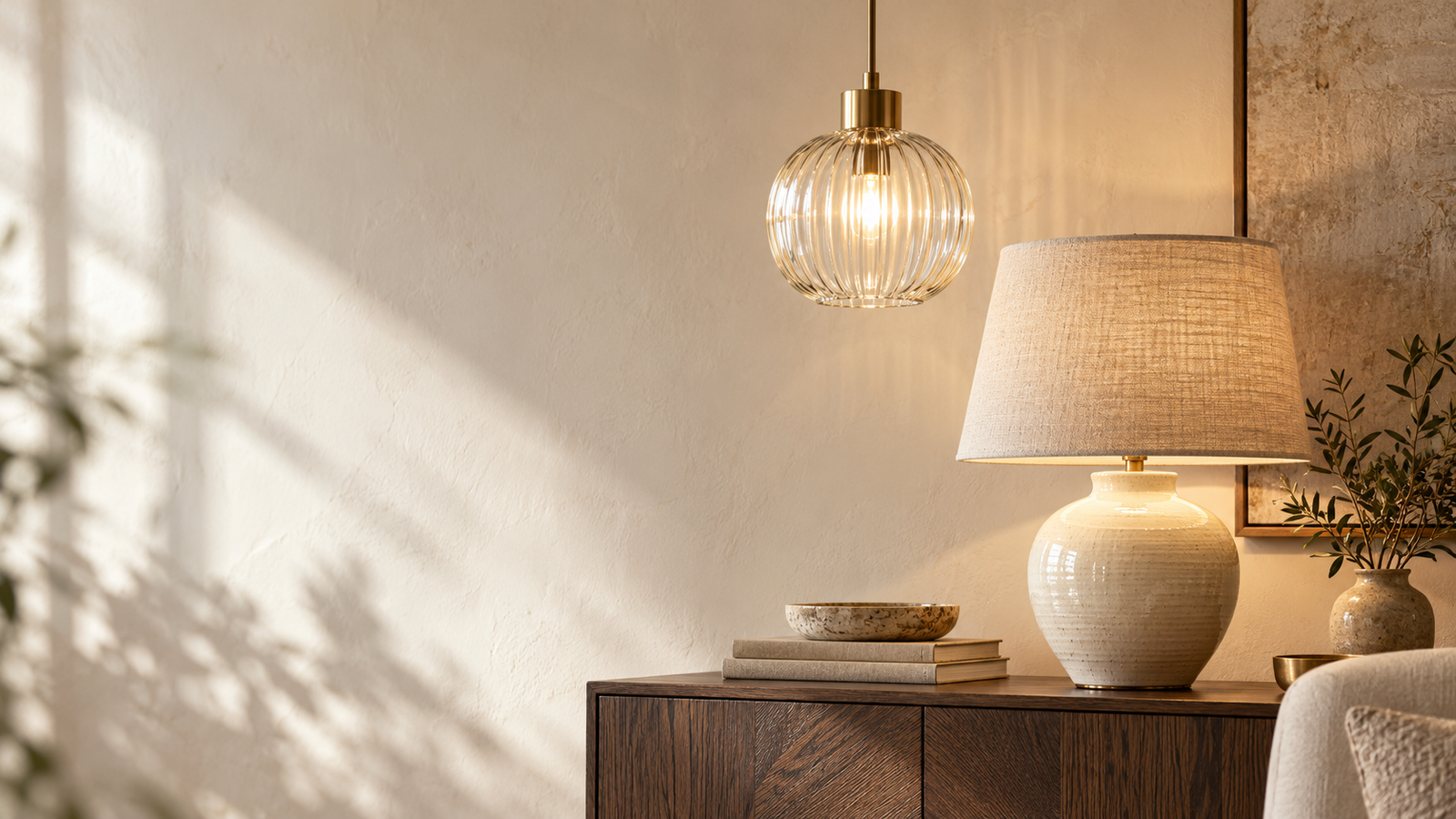
Ceramic is commonly used for decorative table lamps because it can be glazed, patterned, or finished with a handmade appearance. A smooth white ceramic base can suit a simple interior, while terracotta and marbled finishes add warmth and visual texture.
Renov Official’s current table-lamp selection includes striped, terracotta, marbled, and colored ceramic designs, showing how one material can support several interior styles.
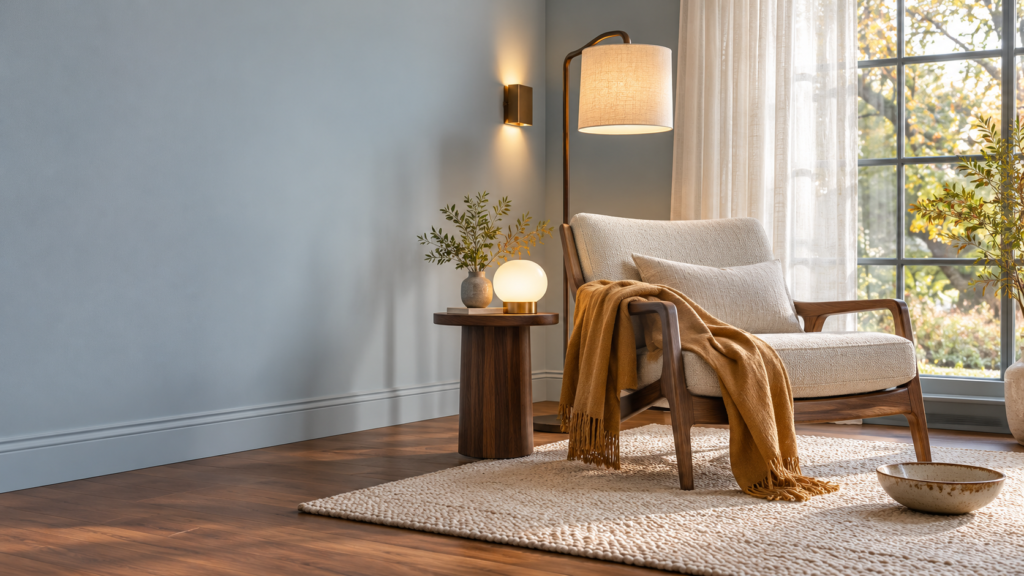
The lampshade also affects the result. Linen and fabric shades generally soften the light, while more open shades may create stronger illumination.
Metal Can Feel Modern or Traditional
Metal is one of the most flexible lighting materials. Matte black steel can create a clean, architectural appearance, while weathered brass introduces warmth. Brushed nickel and chrome may feel cooler and more contemporary.
For floor lamps for living rooms, metal arms can provide strength while allowing shades to extend over sofas or reading chairs. Some arc lamps combine steel frames with brass finishes and marble bases, creating contrast between industrial and natural materials.
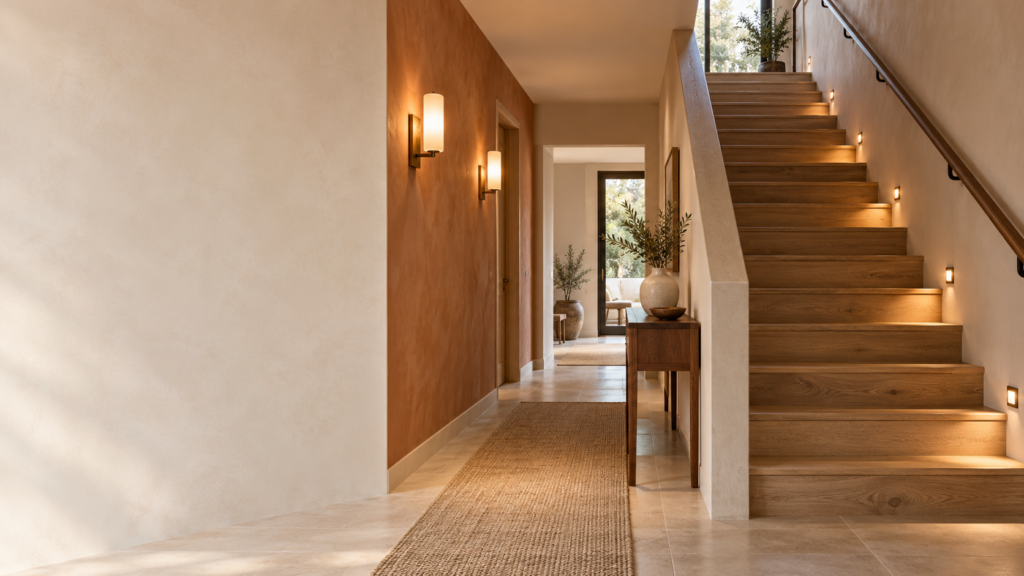
Metal also works well for wall sconces because it can support narrow profiles, adjustable heads, and directional shades without requiring much wall space.
Marble Adds Weight and Stability
Marble is often associated with luxury, but it also performs a practical role. Floor lamps with long or curved arms need a stable base, and marble provides weight without making the design appear purely functional.
Because marble contains natural variations, each base may have slightly different markings. Black marble can create a bold contrast with brass or nickel, while white marble may produce a lighter appearance.
When selecting a marble lamp, consider the total weight. The fixture may be difficult to move once positioned, so furniture placement should be planned first.
Mica Produces a Warm Glow
Natural mica has a layered, mineral appearance and can create a soft amber glow when illuminated. Renov Official currently lists several arc floor lamps using mica shades alongside wood, bronze, and black steel elements.
This material can work well in reading corners and living rooms where warm ambient light is preferred. However, the shade color may influence the brightness and color of the light, so product specifications should be checked carefully.
Glass and Alabaster Change Light Differently
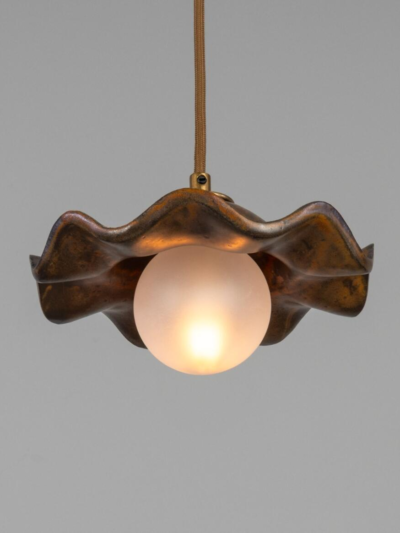
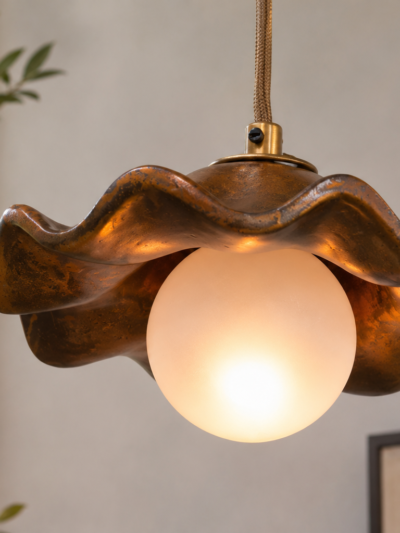
Glass may be clear, frosted, colored, or textured. Clear glass exposes the bulb and can feel bright, while frosted glass diffuses light and reduces glare. Art glass can also turn pendant lighting fixtures into decorative focal points.
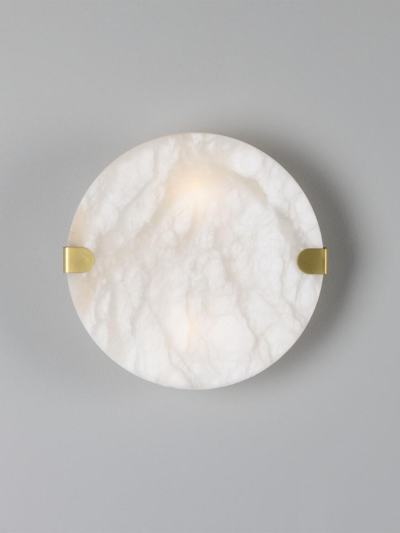
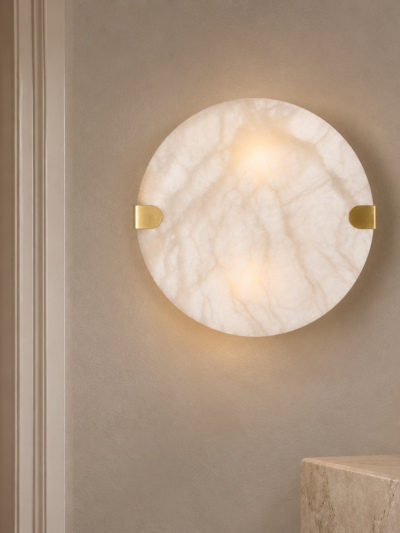
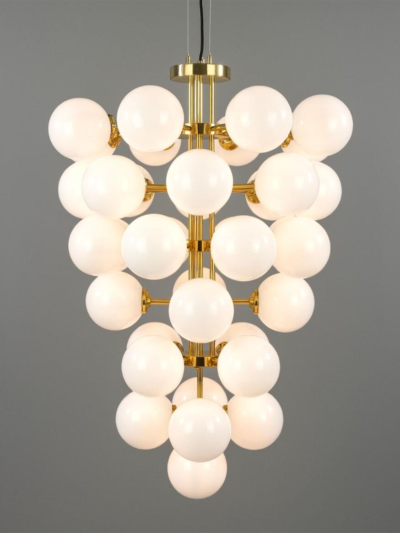
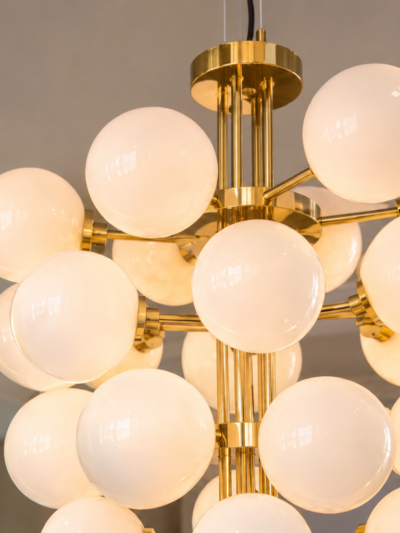
Alabaster-style diffusers are often used in luxury chandeliers and other forms of designer ceiling lighting. Their pale surface can soften integrated LED light while adding subtle variation.
The store’s current chandelier range includes jade diffusers, alabaster discs, alabaster rings, art glass, and sculptural steel designs.
Match Materials to the Room
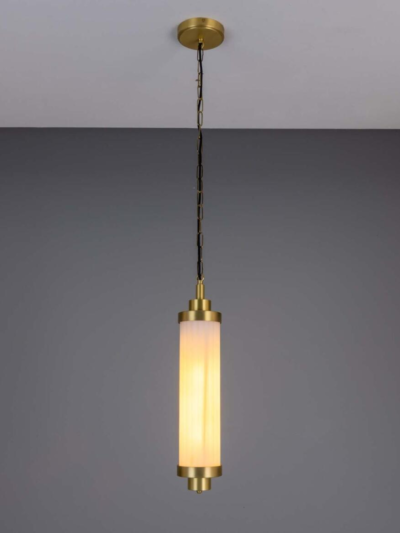
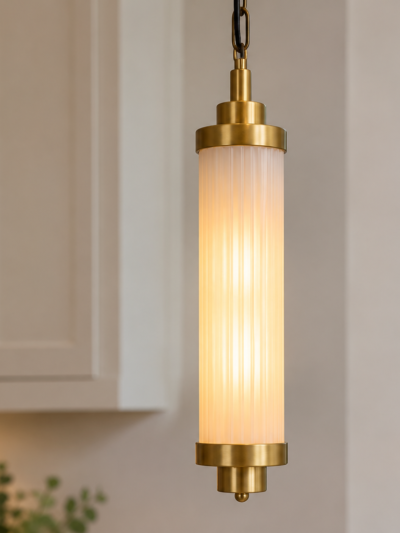
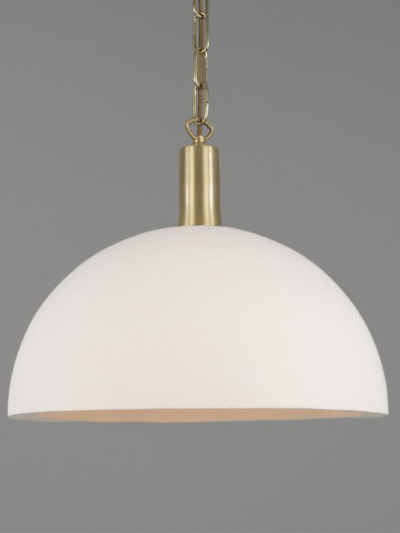
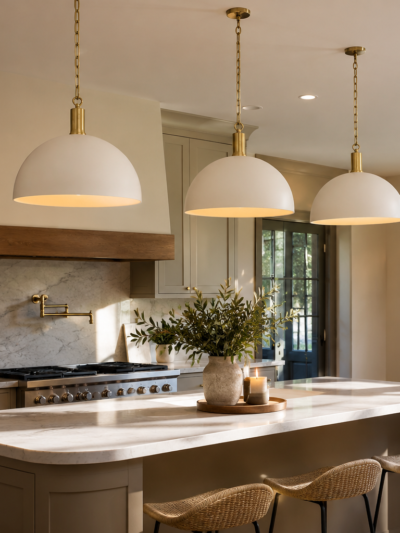
A room does not need every fixture to use the same material. Repeating one finish is often enough to create consistency. For example, brass pendant lights can relate to brass wall sconces, while ceramic table lamps introduce a softer contrast.
In lower rooms, flushmount ceiling lights should complement the surrounding hardware without making the ceiling feel crowded. In bathrooms, modern vanity lighting should be selected for both appearance and suitability for damp conditions.
Conclusion
Lighting materials influence color, texture, weight, and the way illumination spreads through a room. Ceramic adds character, metal provides structure, marble creates stability, and glass or alabaster can soften or shape the light. Considering these qualities alongside size and brightness can lead to a more balanced interior.
Frequently Asked Questions
Do all lighting finishes need to match?
No. Different finishes can work together when one color, shape, or material is repeated elsewhere in the room.
Is marble practical for floor lamps?
Yes. Its weight provides stability, particularly for tall or extended arc designs.
Does the shade material affect brightness?
Yes. Dark, opaque, or textured shades usually absorb or soften more light than clear or open designs.